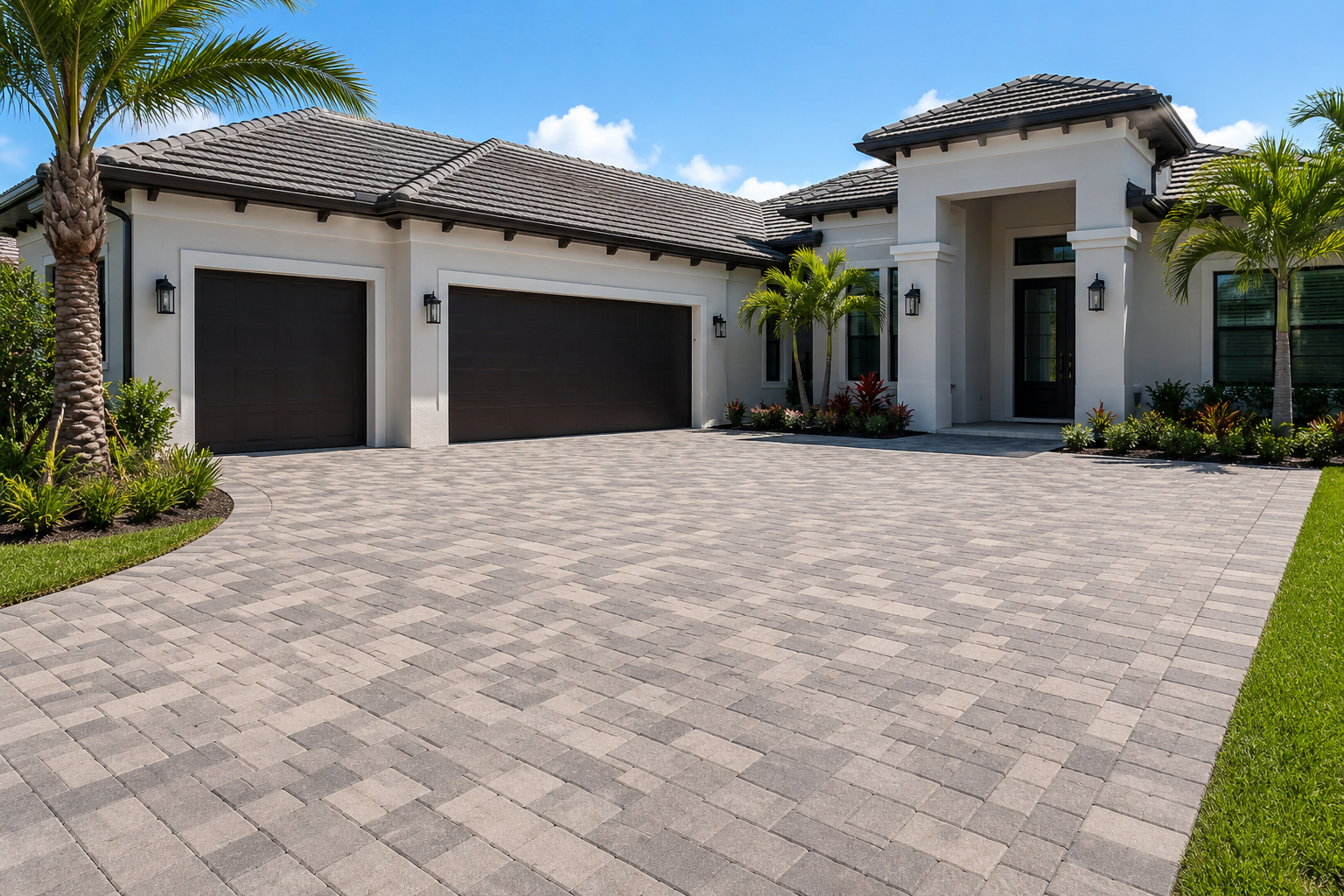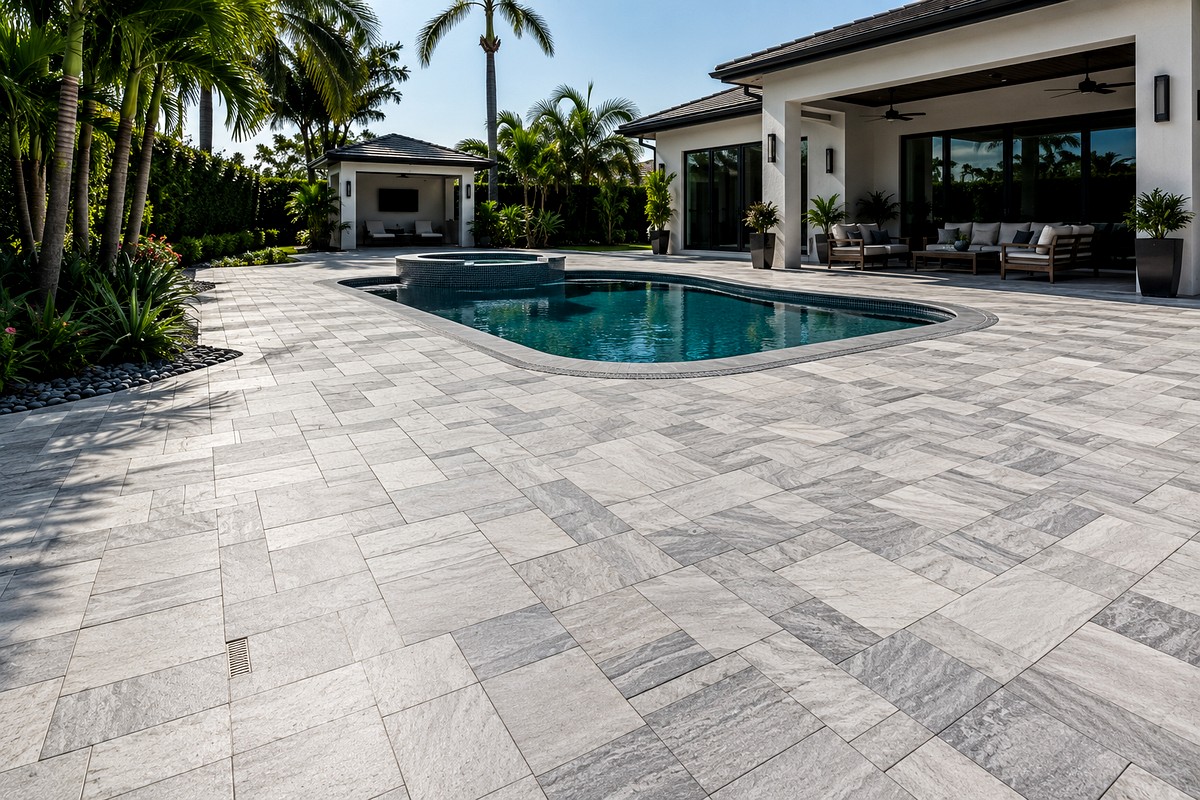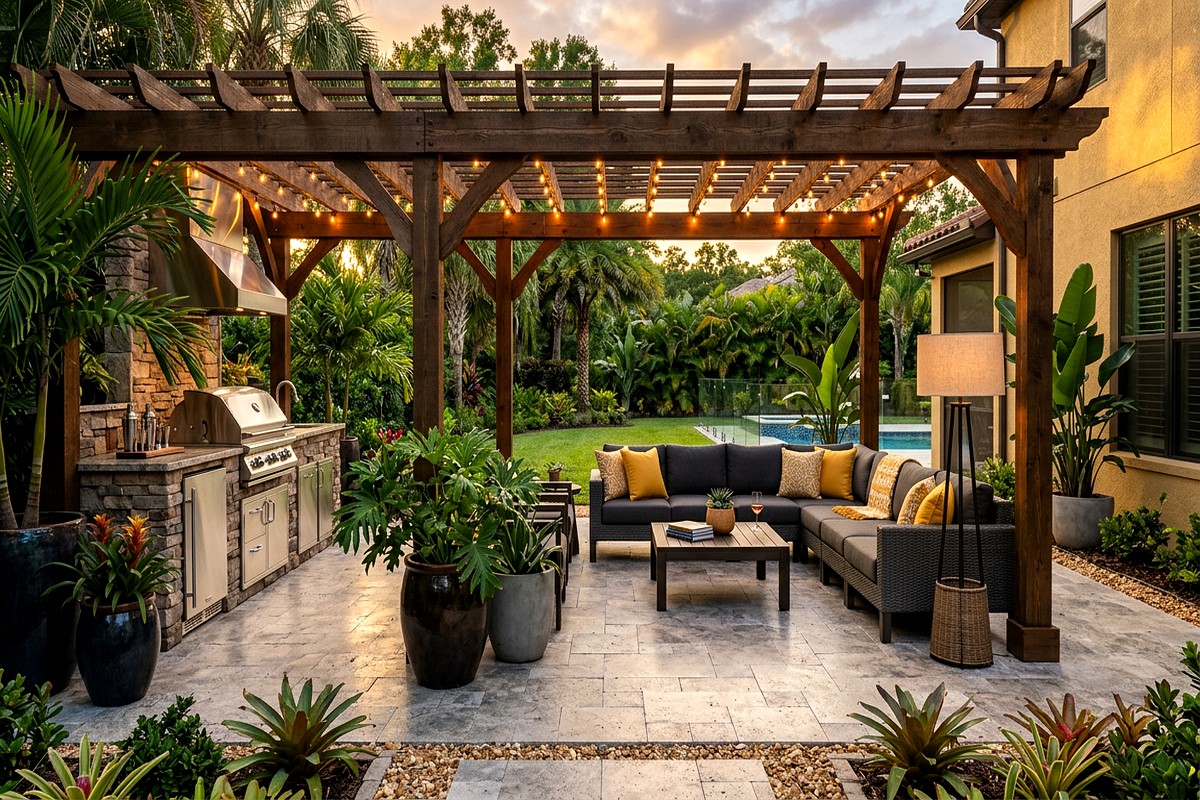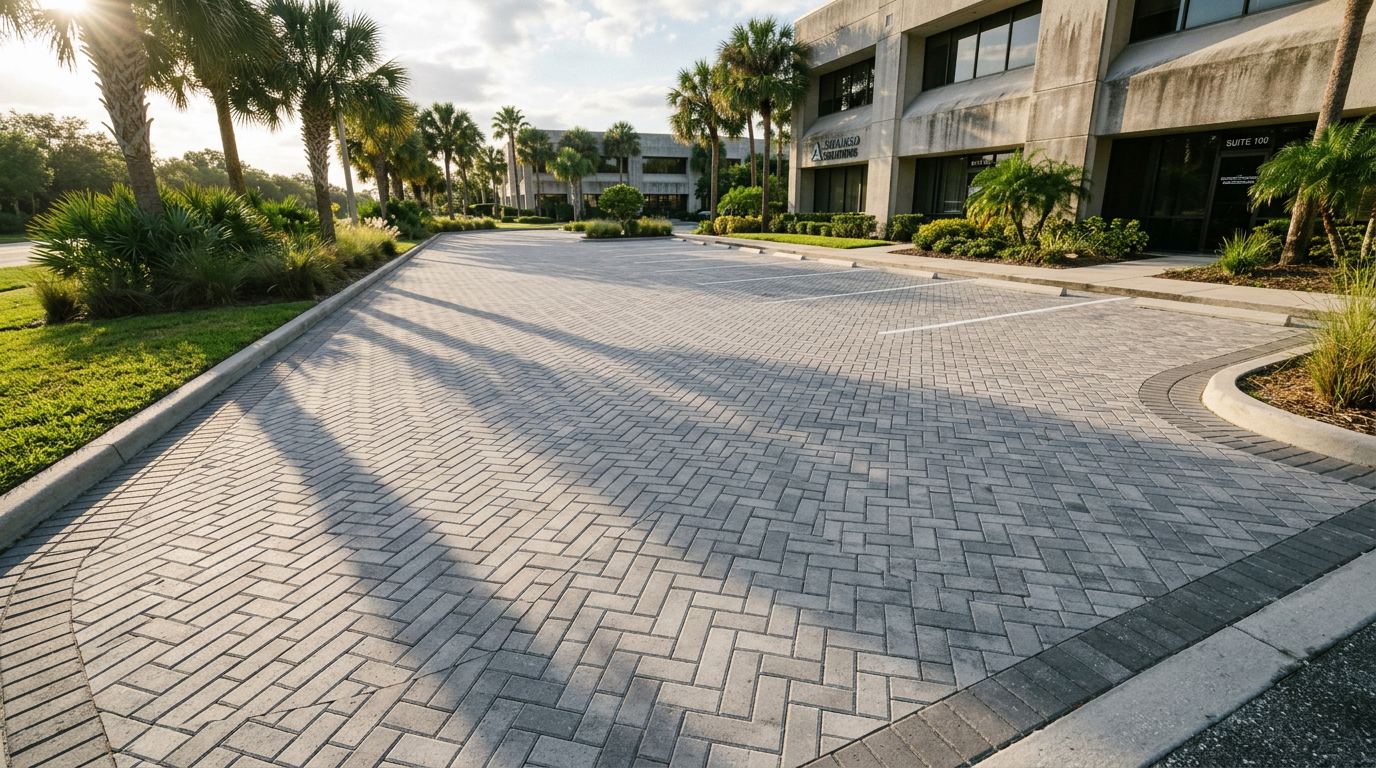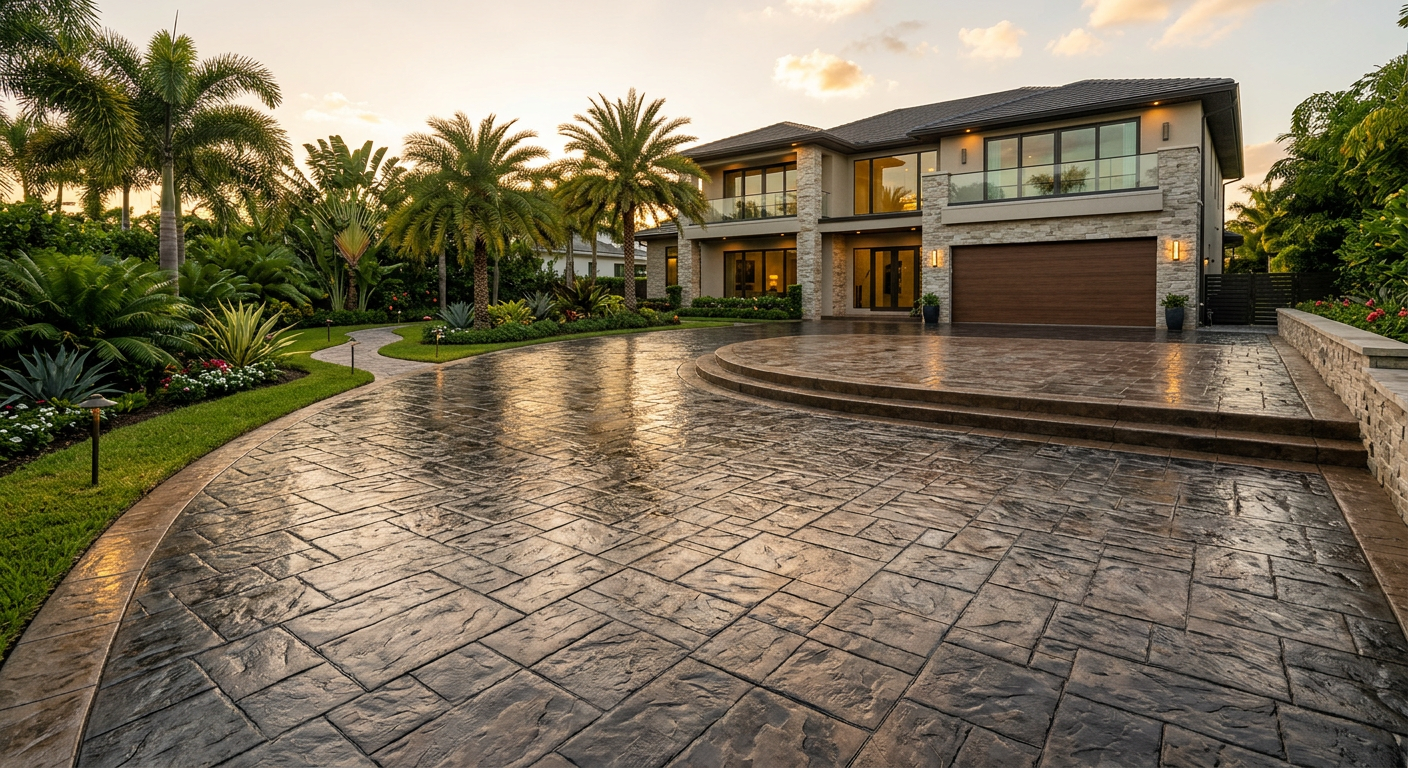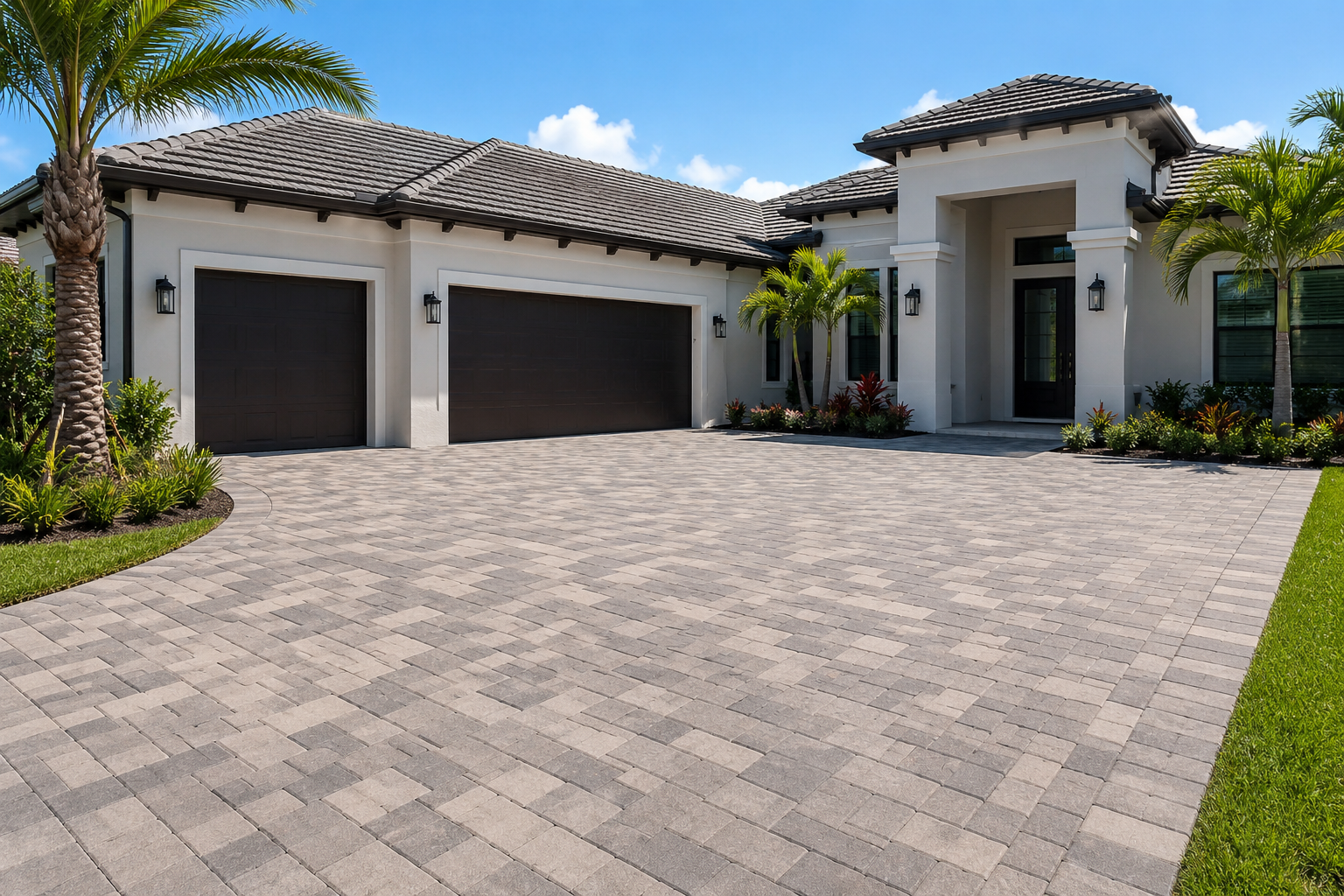
Choosing between an interlocking paver driveway and decorative stamped concrete is one of the most common dilemmas for Central Florida homeowners. While both options offer distinct luxury curb appeal, Florida’s intense subtropical humidity, heavy rainstorms, and sandy subgrade introduce unique performance considerations.
Understanding Subgrade Compaction & Drainage
In Central Florida, sandy soil compacts easily but drains rapidly. Interlocking pavers feature permeable sanded joints that flex naturally as the ground expands and contracts, preventing visible cracking. In contrast, stamped concrete requires strategic control joints to prevent unpredictable fissures caused by thermal expansion.
Repairability Over Time
If an underground irrigation pipe leaks or tree roots heave a section of pavers, individual pavers can be lifted, the subgrade repaired, and the pavers relaid invisibly. With stamped concrete, patching a cracked section requires saw-cutting and repouring, which usually leaves a noticeable color and texture seam.
The Verdict for Florida Homes
While stamped concrete provides a lower initial installation cost, interlocking pavers offer superior long-term durability and negligible replacement hassle, making them the preferred choice for premier estates in Windermere, Winter Park, and Lake Nona.